Garden guide
The best fruit trees to grow at home, by climate
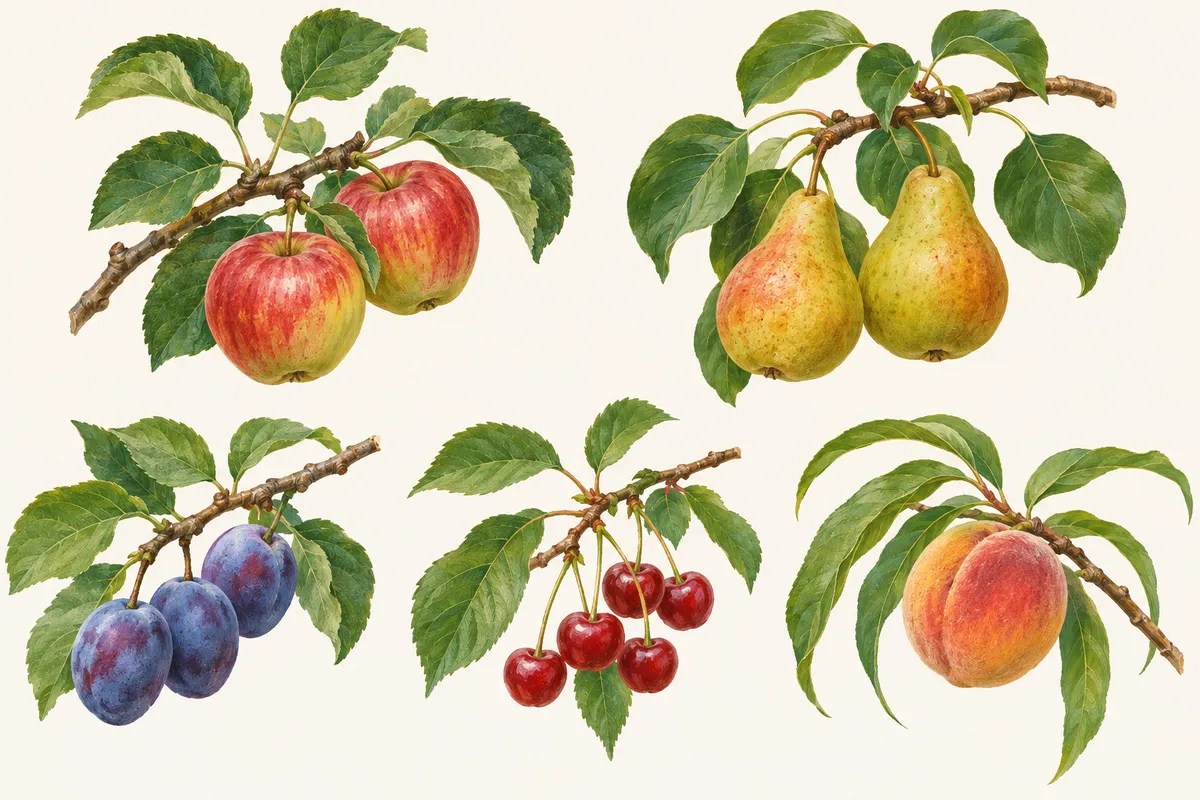
Extension services rate the popular fruits (apple, peach, plum, cherry) as the hardest to grow without sprays, and point beginners to figs, persimmons, pawpaws and a few tougher varieties.
In short
The best fruit trees to grow for most home gardeners are the ones with the fewest pests. University of Maryland Extension names figs, persimmons, jujube, serviceberry and pawpaw as easier for new growers. Oregon State says figs need no sprays and Brooks and Italian plums are among the easier fruits. Maryland ranks apples, pears, peaches, plums and cherries as the hardest to grow well in the mid-Atlantic, because of pests and diseases.
- Apple, pear, peach, plum and cherry are the most popular fruit trees and, in the mid-Atlantic, the hardest to grow well, because of pests and diseases rather than cold.
- Figs, persimmons, pawpaws, serviceberries and jujubes are the usual extension picks for beginners; they are not pest-free but can be grown without pesticides.
- Region decides the rest: loquat and figs in north Florida, sour cherries and Brooks or Italian plums in Oregon, scab-resistant apples in New Hampshire.
- Many fruit trees need a second variety nearby to set fruit; figs, peaches, nectarines and apricots are self-fruitful.
The best fruit trees to grow are not the ones people usually buy first. Apples, peaches, plums and cherries fill garden-centre benches, yet extension horticulturists describe them as the hardest fruits to grow well at home, because of insects and diseases rather than cold. The picks below come from university extension services in Maryland, Oregon, New Hampshire, Florida and Texas, with what each says and where it applies.
Easier fruit trees, by region
| Region (source) | Easier choices named | Harder or with caveats |
|---|---|---|
| Mid-Atlantic (University of Maryland Extension) | Fig, persimmon (Asian), Asian pear, hardy pomegranate, jujube, pawpaw, serviceberry, beach plum, elderberry, chokeberry | Apple, pear, peach, plum, cherry: disease and pest pressure |
| Pacific Northwest (Oregon State Extension) | Fig (no sprays), Japanese persimmon (few pests), Brooks and Italian European plums, sour cherries | Peach (one of the most difficult), apple (scab, codling moth), sweet cherry (no wet or clay soils) |
| New England (UNH Extension) | Scab-resistant apples, fire-blight-resistant pears, plums with brown rot and black knot resistance | Peach too cold in parts of New Hampshire; cherries attract birds |
| North and central Florida (UF/IFAS) | Common figs ('Celeste', 'Brown Turkey', 'Ischia'), loquat in north Florida | Root-knot nematodes on figs; hard freezes on loquat |
| Texas (Texas A&M AgriLife) | Pears, peaches and nectarines are popular; citrus, olive and pineapple guava where frost allows | Plant most fruit trees December to February; subtropicals after frost |
Read on 10 November 2026. Ask your county extension office for the varieties that suit your exact area.
Why apples, peaches and cherries are hard
University of Maryland Extension horticulturist Miri Talabac writes in Maryland Grows that the most popular fruits, apple, pear, peach, plum and cherry, are the hardest to grow well in mid-Atlantic conditions, "not due to temperature hardiness but rather disease and pest pressures". Even organic growers need a lot of preventive treatment, and once a problem shows, there are few cures.
Jon Traunfeld of the same service adds the details: tree fruits have more insect pests and diseases that are hard to manage without synthetic pesticides, and a garden sprayer often cannot cover the whole tree, tops and undersides of leaves included. Brown rot is a severe fungal disease of the stone fruits (peach, nectarine, cherry, plum, apricot), and cedar-apple rust is a major defoliating disease of apples in Maryland. Fruit trees also need careful training and pruning, especially in their first three to four years, and even a dwarf apple can take up about 75 square feet. He suggests beginners start with small fruits such as berries.
Oregon State Extension reaches the same verdict in a different climate: peaches are one of the most difficult fruits to grow, apple scab needs several sprays, and codling moth is the most widespread insect pest of apples in Oregon.
The usual beginner picks
Fig. The most consistent recommendation. Oregon State says fig trees need no sprays and deer don't eat them. UF/IFAS says figs are fairly easy to grow in north and central Florida, recommends common figs because they need no pollination to set fruit, names 'Celeste', 'Brown Turkey' and 'Ischia', and asks for full sun all day. Its warning is root-knot nematodes, a major threat to figs in Florida, which mulch helps deter. The fig page shows how to recognise the tree by its large, rough, three- to five-lobed leaves and milky sap.
Persimmon. Maryland lists persimmons among the easier crops, and Oregon State says the Japanese persimmon has few pests in Oregon. The native common persimmon is a different species, recognisable by its blocky bark; see the persimmon page.
Pawpaw. A native tree with large tropical-looking fruit, listed by Maryland among the easier, more unusual fruits. Oregon State warns that an isolated pawpaw is generally unfruitful for lack of cross-pollination, so plant two. The pawpaw page covers its drooping, 6- to 12-inch leaves and maroon spring flowers.
Serviceberry and jujube. Maryland names both. Serviceberry is a native small tree whose white spring flowers come before or with the leaves, followed by berries that ripen purple-black in early summer; the serviceberry page shows how to identify it.
Asian pear and pomegranate. Traunfeld lists Asian pears, Asian persimmon and hardy pomegranate with the natives above as fruits that are not pest-free but can be grown without pesticides.
Choices for colder and warmer climates
Cold northern gardens. UNH Cooperative Extension says low-input tree fruit is possible with the right selection and site. It recommends apple scab-resistant apple varieties, pears resistant to fire blight and varieties adapted to New Hampshire conditions, which reduce the need for spraying significantly. Many plum varieties have some resistance to brown rot and black knot. Cherries attract birds, and netting is the best protection. Parts of New Hampshire are too cold for tender fruits such as peach. UNH adds that dwarf trees take up less space, bear earlier and are easier to spray and prune.
Pacific Northwest. Oregon State calls Brooks and Italian European plums among the easier fruits in the home orchard, and says sour cherries are smaller, bear earlier and have fewer disease problems than sweet cherries. Sweet cherries do not tolerate wet or clayey soils, and peach growers can choose 'Frost' or 'Rosydawn', which resist peach leaf curl.
Florida. Besides figs, UF/IFAS Extension Escambia County describes loquat as an easy fruit choice for north Florida: an evergreen tree with dark green leaves, flowers in fall and orange fruit in spring if the winter is not too cold. Trees reach 20 to 25 feet, and the article reports one demonstration tree killed by a hard freeze followed by bark beetles.
Texas. Texas A&M AgriLife fruit specialist Tim Hartmann says in a 2026 AgriLife article that pears, peaches and nectarines are popular choices with home gardeners. Most fruit trees do best in full sun on well-drained ground; on low, soggy spots, plant on a mound. Plant most fruit trees from December through February, and citrus, olives and pineapple guava only after the threat of frost has passed.
Pollination: one tree or two
A healthy tree that never fruits often lacks a partner. Talabac lists figs, peaches, nectarines and apricots as self-fruitful, along with some varieties of apple, cherry, pear, persimmon and plum; other varieties will not produce fruit if planted alone. She advises pairing like with like: do not count on Asian and European pears pollinating each other, or early- and late-blooming apples. UNH says cross-pollination needs two different varieties of the same fruit, and notes that sour cherries do not pollinate sweet cherries and European plums do not pollinate Japanese plums. Oregon State adds that the three main sweet cherry varieties, Bing, Lambert and Royal Ann, will not pollinate one another.
Identifying the fruit tree you already have
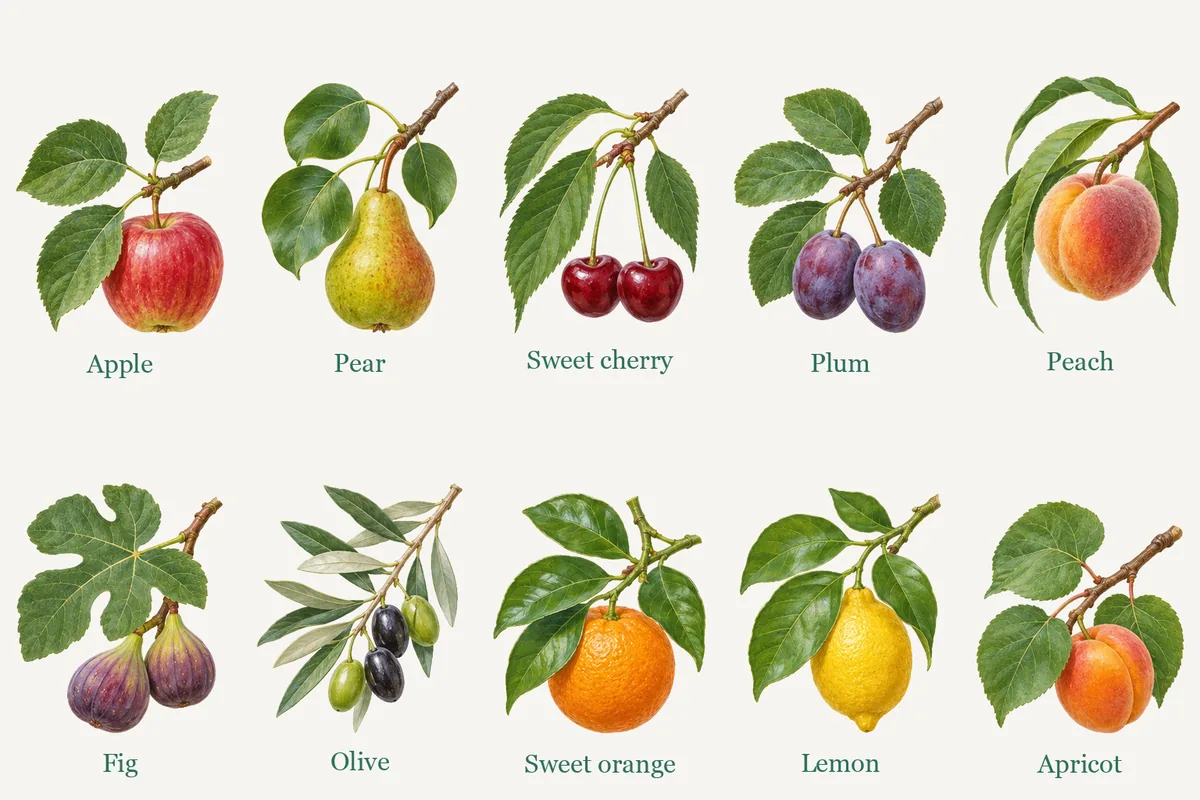
Many people start with a tree that came with the house. Before planning a partner tree or a spray routine, identify it: the fruit tree identification guide tells apple, pear, plum, cherry and peach apart by leaf, bark and blossom, and explains why the variety usually needs the fruit or a lab.
Tree Identifier names a tree from one photo of a leaf, the bark, a flower or the fruit. Its Care Guide gives general growing notes for the species, the Diagnose tool gives a health assessment with a severity level if leaves are spotted or fruit is rotting, and, with location turned on, the Tree Map pins where each tree was found. It names the species, not the cultivar or rootstock, so it cannot tell you whether a tree needs a pollinator; the nursery label or your extension service can.
What a photo can't settle
- Every recommendation here is regional. UF/IFAS writes for north and central Florida, and UNH warns that parts of New Hampshire are too cold for peaches, so a tree praised in one state can fail in another. Use your state extension service's fruit list for varieties.
- Easier does not mean pest-free: the University of Maryland stresses that figs, persimmons and native fruits still get pests and diseases, only fewer that need sprays.
- A photo can name a fruit tree's species, but not its variety, rootstock or whether it needs a pollination partner. The nursery label and a local expert settle those.
Questions people ask
What is the easiest fruit tree to grow?
Extension services most often name the fig. Oregon State says fig trees need no sprays and deer don't eat them, UF/IFAS calls figs fairly easy to grow in north and central Florida, and University of Maryland Extension lists figs among the easier crops for a new grower. Ask your extension service whether figs are hardy where you live.
Which fruit trees do not need spraying?
None is pest-free, but some can be grown without pesticides. University of Maryland Extension lists figs, Asian pears, Asian persimmon, hardy pomegranate, pawpaw, serviceberry and other natives. New Hampshire Extension says scab-resistant apples and fire-blight-resistant pears reduce the need for spraying significantly.
Do I need two fruit trees to get fruit?
For many kinds, yes. University of Maryland Extension lists figs, peaches, nectarines and apricots as self-fruitful, along with some varieties of apple, cherry, pear, persimmon and plum. Others will not fruit alone. New Hampshire Extension says apples, pears, plums, apricots and sweet cherries need or benefit from a second variety.
What fruit trees grow in cold climates?
In New Hampshire, the state extension service recommends scab-resistant apples, fire-blight-resistant pears and plums with some resistance to brown rot and black knot, and warns that parts of the state are too cold for peaches. Check your own state's list for varieties hardy where you live.
What is the hardest fruit tree to grow?
Peach is often named. Oregon State calls peaches one of the most difficult fruits to grow, though many home orchardists succeed. University of Maryland Extension says brown rot is a severe disease of peach, nectarine, cherry, plum and apricot, and that apple, pear, peach, plum and cherry are the hardest fruits to grow well there.
Sources
- Q&A: Fruit tree considerations for the home garden — University of Maryland Extension, Maryland Grows (Miri Talabac)
- Fruit in your future? Start with small fruits, not tree fruits — University of Maryland Extension, Maryland Grows (Jon Traunfeld)
- Growing tree fruits and nuts at home (EC 819) — Oregon State University Extension Service
- Growing Fruits: Low-Input Tree Fruits for NH Home Orchards — University of New Hampshire Cooperative Extension
- Figs — UF/IFAS Gardening Solutions, University of Florida
- An Easy Fruit Selection for Your Landscape — UF/IFAS Extension Escambia County (Beth Bolles)
- When and how to plant fruit trees for 'fruitful' results — Texas A&M AgriLife Today
Keep reading
- Field guideFruit tree identification by leaf, bark and blossom
- Tree profileCommon fig (Ficus carica): how to identify it
- Tree profilePersimmon tree (Diospyros): how to identify it
- Tree profilePawpaw (Asimina triloba): how to identify it
- Tree profileServiceberry (Amelanchier): juneberry, shadbush and saskatoon