Garden guide
Fast growing trees, and what fast growth costs
Which trees the Missouri Department of Conservation and NDSU class as fast, how many inches a year that means, and why silver maple, Bradford pear and willow come with warnings.
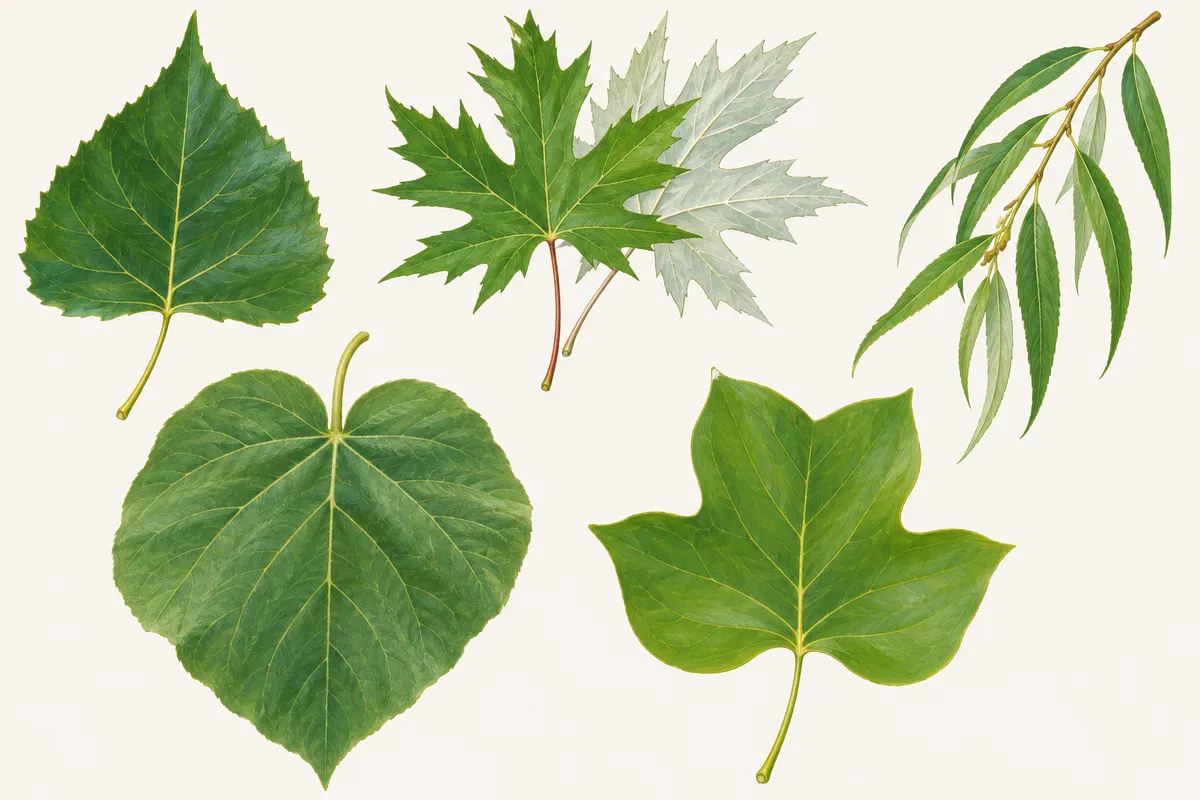
In short
Fast growing trees are those that can add 24 inches or more of height a year, in the Missouri Department of Conservation's definition. Its fast list includes American sycamore, river birch, pin oak, eastern cottonwood, silver maple and eastern white pine. NDSU names thornless honeylocust, which can grow 3 to 4 feet a year when young, but warns that fast growth often means weak wood and a short life.
- Missouri's Department of Conservation classes growth as slow (12 inches or less a year), medium (12 to 24) and fast (24 or more).
- Thornless honeylocust, river birch and disease-resistant elms grow fast without the worst drawbacks, according to NDSU.
- Silver maple, Bradford pear and big willows grow fast but break, crack pavement or die young: NC State and NDSU both warn against them near houses.
"Fast growing" has a working definition. The Missouri Department of Conservation classes a tree as fast when it can add 24 inches or more of height a year, medium at 12 to 24 inches and slow at 12 inches or less. Speed is real and useful, but extension foresters attach a warning to it, so this guide lists both the fast trees they recommend and the ones they caution against.
Fast growing trees on extension and state lists
| Tree | Growth figure | Source | The catch, as the source puts it |
|---|---|---|---|
| Thornless honeylocust | 3 to 4 ft a year when young; 40 to 50 ft within 10 years | NDSU | Not ideal for small yards; fruit can be messy |
| River birch | Fast (Missouri); rapid, 30 to 70 ft (NC State) | Missouri, NC State, NDSU | Needs room; spreading limbs |
| American sycamore | Fast, over 60 ft | Missouri | A very large tree |
| Pin oak, Nuttall oak, cherrybark oak | Fast, over 60 ft | Missouri | Large oaks for big lots |
| Eastern cottonwood | Fast, over 60 ft | Missouri | Less dense, weak wood (NDSU) |
| Silver maple | Fast, over 60 ft; 50 to 80 ft (NC State) | Missouri, NC State | Weak wood; shallow roots invade drains |
| Eastern white pine | Fast (Missouri); 1 to 1.5 ft a year, 50 ft (NDSU) | Missouri, NDSU | Wind, chlorosis; not salt tolerant |
| Black locust, Osage orange, red mulberry | Fast | Missouri | Missouri gives size and growth only |
| Elms (Dutch elm disease resistant cultivars) | Fast-growing | NDSU | Yearly pruning for the first 10 to 15 years |
| Northern catalpa | A fast grower | NDSU | Not ideal for every location |
| Littleleaf linden | 18 to 22 ft after 10 years from a 6 ft sapling | NDSU | Mild leaf spot and canker, usually not serious |
The Missouri list is written for its own seedling program and classes trees by size and growth only. The NDSU material, a presentation by Todd P. West of the NDSU Woody Plant Improvement Program, is written for the northern Plains (mostly Zone 3) and names cultivars that survive there.
The trade-off: weak wood, shallow roots, short lives
NDSU sums up the problem in one line: fast growth equals weak wood and a short life. The presentation lists four issues:
- Brittle wood. Softer wood and forks with narrow angles snap under wind, snow and ice, and small twigs litter the lawn.
- Short lives. NDSU says to expect a Bradford pear to fail before 20 years and a willow to last less than 50, when other trees live for centuries.
- Disease. Fast growers are prone to fungal canker; willows and poplars especially show bark lesions, black warts or oozing orange sap.
- Shallow roots. Roots near the surface crack sidewalks and driveways, starve the lawn and intercept sewer and utility lines.
Silver maple is the classic case. NC State's plant toolbox calls it fast growing and says its wood is weak and breaks easily in storms and under snow, and that its shallow roots disturb driveways and sidewalks and invade septic systems and drains. NDSU puts golden weeping willow in its trees-to-avoid group for the same reasons, warning not to plant it near a house or driveway because of breakage and roots that seek out cracks in sewer and water pipes. NDSU also advises against overfeeding fast trees, since extra fertilizer pushes growth at the expense of wood strength.
The Bradford pear page shows how to recognise one of the most planted short-lived trees, and the silver maple page tells silver maple from red maple.
Fast growers with fewer problems
Some trees grow fast and still earn a recommendation. NDSU singles out:
- Thornless honeylocust, fast and long-lived, often 70 years or more, with small leaflets that disappear into the lawn and dappled shade that suits underplanting. It tolerates drought, heat, occasional flooding, salt and pollution.
- River birch, valued for relatively rapid growth, tolerance of wet and some drought, curling bark, yellow fall colour and high resistance to bronze birch borer.
- Elms bred to resist Dutch elm disease, which NDSU says often live 100 years or more. It flags Siberian elm as highly invasive.
- Hackberry, which NDSU says tree experts call "one tough tree": drought and flood tolerant and able to stand up to strong winds.
NDSU's practical answer to the wait for shade is succession planting: put in slower, stronger, longer-lived trees together with a few fast ones, and remove the fast ones after a decade or so, once the permanent trees reach a useful size.
How to recognise the fast growers
If you have a fast-growing tree already, or a seedling that shot up, these marks identify the common ones:
- Silver maple: opposite leaves, 3 to 6 inches, with five deeply cut lobes and a silvery underside that flashes in wind; gray bark that peels in long thin strips on older trunks, per NC State.
- River birch: reddish-brown papery bark peeling in layers that stay attached, giving a ragged trunk; leaves 2 to 3.5 inches, wedge-shaped at the base. See the river birch page.
- Honeylocust: feathery compound leaves 5 to 8 inches long with 15 to 30 small oval leaflets, sometimes doubly compound, and long twisting pods. Wild trees carry stout three-forked thorns 2 to 3 inches long; NC State notes that garden cultivars come from the thornless variety. The locust page separates honeylocust from black locust.
Using a photo to check what you have
Tree Identifier names a tree from one photo of a leaf, the bark, the flowers or the fruit, which helps when a volunteer seedling turns into a tree faster than expected. The Care Guide and the follow-up chat under each result can answer questions such as whether a silver maple is too close to a drain. Tree Identifier's Diagnose tool rates visible health problems by severity, useful for the cankers NDSU describes, but a split trunk or a leaning fast-grower near a house needs a certified arborist on site.
What a photo can't settle
- Growth rates are potentials. Missouri's definition says a fast tree 'has the potential' to grow 24 inches a year; poor soil, drought, shade or a cold zone slow any tree down.
- The lists here come from Missouri and North Dakota. Hardiness and invasiveness differ by state: NDSU notes that some states consider Amur maple invasive. Ask your county extension office before planting.
- A photo can name a tree you already have, but it cannot show how fast that tree has grown; count the bud-scale scars on a twig or measure the trunk over a few years instead.
Questions people ask
What is the fastest growing tree for shade?
Among trees extension sources still recommend, thornless honeylocust stands out: NDSU says it can grow 3 to 4 feet a year when young, reaching 40 to 50 feet within 10 years, and often lives 70 years or more. It needs room; NDSU says it is not ideal for small yards.
How fast is a fast growing tree?
The Missouri Department of Conservation calls a tree fast when it can grow 24 inches or more a year, medium at 12 to 24 inches and slow at 12 inches or less. NDSU describes fast trees as ones that mature in 20 to 30 years.
Why are fast growing trees bad?
Not all are, but NDSU lists the usual problems: weak, brittle wood that snaps in wind, snow and ice; shallow roots that crack pavement and find sewer pipes; more canker disease; and short lives, with Bradford pear often failing before 20 years and willow before 50.
Do any fast growing trees live a long time?
Yes. NDSU gives elms a lifespan often of 100 years or more and thornless honeylocust 70 years or more, while noting this is not always the case for fast growers. Missouri also classes pin oak, Nuttall oak and cherrybark oak as fast.
Sources
- Tree Growth Information — Missouri Department of Conservation
- Fast Growing Trees: Should I, or Shouldn't I? (Todd P. West, NDSU Woody Plant Improvement Program) — North Dakota State University Extension
- Acer saccharinum (silver maple) — North Carolina Extension Gardener Plant Toolbox, NC State University
- Betula nigra (river birch) — North Carolina Extension Gardener Plant Toolbox, NC State University
- Gleditsia triacanthos (honey locust) — North Carolina Extension Gardener Plant Toolbox, NC State University
Keep reading
- Tree profileRiver birch (Betula nigra): how to identify it
- Tree profileSilver maple tree (Acer saccharinum): how to identify it
- Tree profileLocust trees: how to identify black locust and honey locust
- Invasive tree profileBradford pear and Callery pear (Pyrus calleryana): how to identify them
- Garden guideBest trees for small gardens, from the RHS and extension lists