Care guide
When to prune trees, and the trees that break the rule
Late winter suits most trees, but oaks, elms, sap bleeders, spring bloomers and fruit trees each need their own timing, so name the tree before you cut.
In short
When to prune trees: for most deciduous trees, in the late dormant season, February through March, according to Iowa State University Extension. Never prune oaks from March through October in Iowa, because fresh cuts invite oak wilt. Spring-flowering trees such as redbud and dogwood are pruned right after flowering, and dead or broken branches can come off at any time.
- Late winter (February to March) is the default window for most deciduous shade trees: the branches are bare and most insects and diseases are inactive.
- Oaks and elms have legal or disease-driven no-cut seasons in many regions; check your own state or province before cutting.
- Trees that flower in spring set their buds the year before, so a winter cut removes the flowers; prune them right after they bloom.
- Dead, broken and diseased branches can be removed at any time of year.
Knowing when to prune trees depends first on knowing which tree you have. Most shade trees can be cut in late winter. An oak cut in May can catch a fatal disease. A redbud cut in January loses its spring flowers, and in Saskatchewan an elm cut in June is against the law. This guide gives the default window, then the trees that break it, each with the source that sets the rule.
The short answer by tree
| Tree | Best time | Avoid | Source |
|---|---|---|---|
| Most deciduous shade trees | Late dormant season, February–March; late May to mid-June also acceptable | Spring leaf-out and fall leaf drop | Iowa State Extension |
| Oaks | Winter; early November to very early April near Chicago | March–October (Iowa); mid-April to mid-October (Chicago) | Iowa State; Morton Arboretum |
| Elms | Before April 1 or after August 31 (Saskatchewan) | April 1 – August 31 in Saskatchewan, by law | Government of Saskatchewan |
| Maple, birch, elm (heavy sap) | Late May to mid-June | Late winter if sap bleeding bothers you | Iowa State; UW-Madison |
| Spring-flowering trees (redbud, dogwood, magnolias, crabapple, hawthorn) | Right after flowering | Winter, which removes the flower buds | LSU AgCenter |
| Summer-flowering trees (crape myrtle, sourwood, catalpa, golden rain tree) | Dormant season | Topping | LSU AgCenter; Clemson Extension |
| Pine, spruce, fir | Lower limbs in late winter; pine candles in spring at 2–3 inches | Fall | Iowa State |
| Apple, pear, tart cherry, plum | Late winter, before buds break | Before January | Nebraska Extension |
| Peach, apricot, sweet cherry | Late March, just before bud swell | Early winter | Nebraska Extension |
| Dead, broken or diseased wood | Any time | — | Iowa State; Chicago Botanic Garden |
Windows are those given by the named sources, read on 10 November 2026, and most are Midwestern. In warmer regions trees leave dormancy earlier; ask your state extension service for local dates.
The default: late winter for most trees
Iowa State University Extension says most trees should be pruned during the late dormant season, February through March, and names late May to mid-June, once trees are fully leafed out, as another acceptable time. It advises avoiding the two in-between seasons, when trees are leafing out in spring and dropping leaves in fall.
The reasons are practical. UW-Madison Extension explains that in late fall and winter the branch structure is easy to see and most insects and disease organisms are inactive, while late spring and summer are poor times because pathogens are active and wounds close more slowly. The same publication sets two limits that apply in any season: remove no more than one third of a young tree's crown at one time, and never top an older tree. Newly planted trees should not be pruned at all, except for broken, diseased or dead branches, until they have been established for two to five years.
A late-winter cut is also the one time you cannot use leaves to check what you are cutting. Name the tree before the leaves fall, or use the buds and bark, as the winter tree identification guide explains.
Oaks: the no-cut season that matters most
Oaks are the main exception because a pruning wound is one of the ways oak wilt gets in. UW-Madison explains that insects which spread the fungus can enter fresh wounds made during the growing season. The dates vary by region:
- Iowa: do not prune oaks from March through October, says Iowa State. If a cut is unavoidable in spring or summer, paint it with latex house paint.
- Chicago region: the Morton Arboretum says oaks should not be pruned between mid-April and mid-October, and that the safest time is from early November until very early April.
- Wisconsin: UW-Madison says late fall and winter pruning matters most for oaks, and recommends a wound treatment on any oak pruned during the growing season.
Before you follow these dates, confirm that the tree is an oak. Red oaks and pin oaks have bristle-tipped lobes; white and bur oaks have rounded lobes. The oak page covers both groups, and the oak wilt guide lists the no-wounding seasons set in Minnesota, Texas and Canada and how the disease looks.
Elms: pruning bans against Dutch elm disease
Elms have the same problem with a different disease. The Government of Saskatchewan bans elm pruning every year from April 1 until August 31. It explains that Dutch elm disease is a fatal fungus carried by elm bark beetles, which are drawn to fresh pruning cuts in warm weather. Pruning before or after that period is allowed, and removing a whole elm is allowed at any time, provided all the elm wood goes promptly to a designated disposal site and the stump is treated or removed.
Other provinces, states and cities set their own rules, and some have none. If you have an elm (alternate, double-toothed leaves with a lopsided base), check your local rule. The elm page shows how to recognise one.
Maples, birches and other sap bleeders
Cut a maple, birch or elm in late winter and sap may run from the wound for days. UW-Madison names maple and birch as trees that bleed heavily when pruned in late winter and says the flow is cosmetic: unsightly, but not harmful to the tree. If the bleeding bothers you, Iowa State recommends pruning trees with heavy sap flow, such as maple, birch and elm, from late May to mid-June instead. The Chicago Botanic Garden takes the other approach and recommends winter pruning for maples while they are dormant. Both are acceptable; the difference is only how the cut looks in March.
Flowering trees: spring bloomers after flowering, summer bloomers in winter
Trees that flower in spring formed their flower buds the year before. LSU AgCenter Publication 3869 explains that winter pruning removes those buds, and that these trees are best pruned immediately after flowering, so the new growth can set flower buds for the next season. Its spring list includes southern, sweetbay and saucer magnolia, eastern redbud, flowering dogwood, crabapples, hawthorns, red maple, Chinese fringe tree and empress tree (paulownia).
Summer-flowering trees bloom on growth made the same year, so LSU recommends pruning them during dormancy, which pushes a spring flush of growth and supports flowering. Its summer list includes crape myrtle, sourwood, golden rain tree, tulip tree, catalpa, mimosa and basswood.
Crape myrtle deserves its own warning. Clemson Extension says to prune in late winter or early spring before growth begins, to remove dead or damaged branches whenever you see them, and to avoid topping, which gardeners call "crape murder". Clemson says topped trees do not flower better, and unpruned plants often bloom more. The crape myrtle page shows how to recognise the tree by its peeling bark and crinkled flowers.
Conifers and fruit trees
Conifers. Iowa State says pine, spruce and fir need little pruning. Remove unwanted lower branches in late winter (February or March); shorten spruce and fir shoots in early spring just above a side bud; and on pines, pinch or cut the new "candles" in spring when they are 2 to 3 inches long. Avoid fall pruning of evergreens, which leaves them more open to winter injury. The Chicago Botanic Garden gives spring or early summer for arborvitae and yew.
Fruit trees. Nebraska Extension prunes fruit trees during dormancy, roughly February into early April, because cuts made just before growth starts heal fastest. Apple, pear, tart cherry and plum go first; peach, apricot and sweet cherry, which are more cold tender, wait until late March, just before the buds swell. It warns against pruning any tree before January because of the risk of winter injury. Iowa State gives late February to early April for fruit trees, finished before bud break.
Any time: dead, broken and diseased wood
Some cuts do not wait for a season. Iowa State says dead, broken or diseased branches can be removed at any time of year, and the Chicago Botanic Garden says pruning can be done at any time when dead branches create a safety hazard. LSU's rule of thumb is the "four D's": dead, dying, diseased and damaged branches can come off whenever you find them.
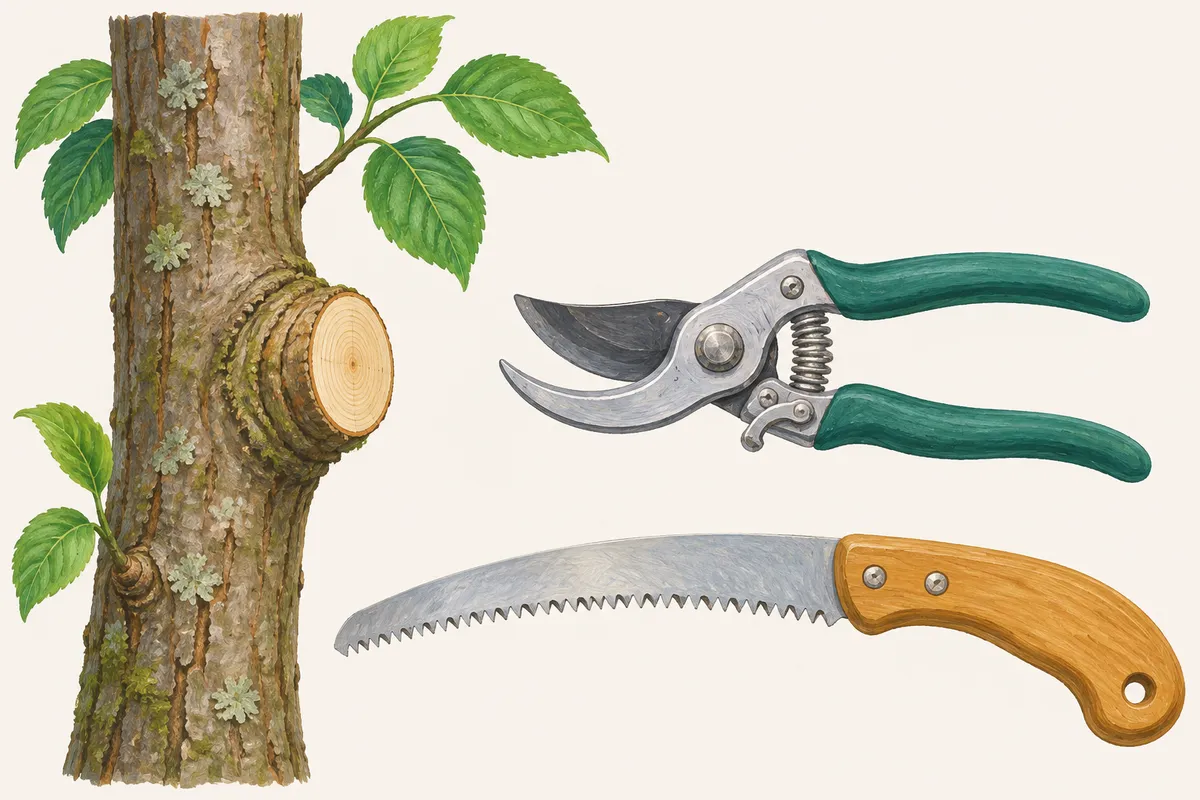
Two more rules apply in every season. Cut back to the branch collar, the swollen ring where a branch joins the trunk, and remove heavy limbs with three cuts (an undercut, a top cut further out, then the stub) so the bark does not tear. And do not paint ordinary cuts: LSU says dressings inhibit the tree's natural defences, with the oak exception described above.
Naming the tree before you cut
Every window above depends on knowing the tree, and that is hardest in winter, when pruning usually happens. Identify trees while they are in leaf and note them, or work from the twig: opposite buds point to maple, ash or dogwood; clustered buds at the tip to an oak. The guide to identifying trees in your yard walks through the order of checks.
Tree Identifier names a tree from one photo of a leaf, the bark, a flower or the fruit, and its Care Guide gives general care notes for the tree it names. If a tree looks sick rather than overgrown, the app's Diagnose tool gives a health assessment with a severity level, which can tell you whether you need an arborist. The app does not tell you whether a branch is safe to cut or what your local rules are; use the sources above for that.
What a photo can't settle
- Every window on this page comes from a named region. A month that is safe in Iowa or Wisconsin can be early or late in Texas, the Pacific Northwest or the UK, so check your state extension service or local authority before cutting.
- Some rules are local law, not advice: Saskatchewan bans elm pruning from April 1 to August 31. Look up your own city, state or province before pruning elms or oaks.
- A photo can suggest which tree you have, but it cannot tell whether a branch is structurally sound. Large limbs, trees near power lines and anything that needs a ladder are jobs for a certified arborist.
Questions people ask
Is it better to prune trees in fall or spring?
Neither, for most trees. Iowa State Extension advises avoiding pruning while trees leaf out in spring and while they drop leaves in fall, and names late winter, February through March, as the best time. Late May to mid-June, once the leaves are fully out, is its second acceptable window.
Can I prune a tree in summer?
Light pruning, yes, for most deciduous trees: Iowa State gives late May to mid-June as acceptable, and the Chicago Botanic Garden says light summer pruning suits most trees. Oaks are the exception wherever oak wilt occurs, and Saskatchewan bans elm pruning from April 1 to August 31.
When should I prune a maple tree?
Maples, birches and elms bleed heavy sap when cut in late winter. The bleeding looks bad but does not harm the tree, according to UW-Madison Extension. Iowa State suggests pruning these trees from late May to mid-June instead, once the leaves are fully out.
When is the worst time to prune an oak?
Spring and early summer, when the beetles that carry oak wilt are active and fresh wounds are most likely to be infected. The Morton Arboretum says not to prune oaks between mid-April and mid-October near Chicago, and Iowa State says not from March through October.
Should I paint pruning cuts?
Usually not. UW-Madison Extension and the LSU AgCenter say wound dressings slow wound closure or weaken the tree's own defences. The exception is an oak cut in the growing season: UW-Madison and Iowa State recommend covering it (Iowa State says latex house paint) to keep out the beetles that spread oak wilt.
Sources
- Proper Time to Prune Trees and Shrubs — Iowa State University Extension and Outreach, Yard and Garden
- Pruning Deciduous Trees (XHT1014) — University of Wisconsin-Madison Extension, Wisconsin Horticulture
- Best Practices for Pruning Ornamental Trees in the Landscape (Pub. 3869) — LSU AgCenter
- Best Time to Prune Trees and Shrubs — Chicago Botanic Garden
- Oak Wilt — The Morton Arboretum
- Protect Our Elms: Don't Prune from April 1 to August 31 — Government of Saskatchewan
- Pruning Established Fruit Trees — Nebraska Extension in Lancaster County
- Crape Myrtle Pruning — Clemson Cooperative Extension, Home and Garden Information Center
Keep reading
- Tree healthOak wilt symptoms in red, white and live oaks
- Tree profileCrape myrtle tree: peeling bark, crinkled flowers and winter capsules
- Yard guideHow to identify the trees in your yard
- Winter field guideWinter tree identification, from buds to bark
- Tree profileOak trees (Quercus): how to identify them