Garden guide
Trees toxic to dogs, and how to recognise them in a yard or park
The trees that animal poison centres list as toxic to dogs, what part of each one causes trouble, and the leaf, fruit or bark that tells you which tree your dog was chewing.
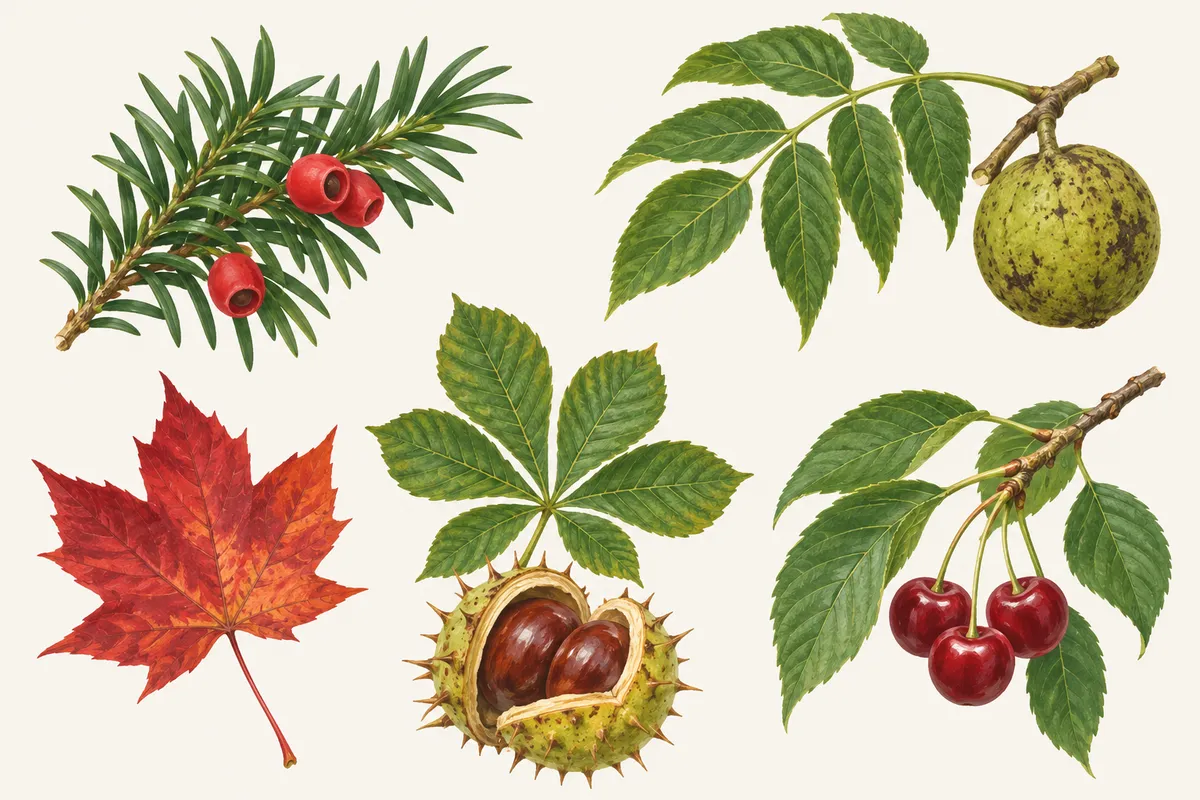
In short
Trees toxic to dogs, as listed by the ASPCA and Pet Poison Helpline, include yew (the whole plant, red fruits included; it can stop the heart), sago palm (worst of all: liver failure), horse chestnut and buckeye, black walnut (moldy nuts and hulls cause tremors), cherry and other Prunus (pits, leaves and stems), black locust, laburnum, holly and chinaberry. If your dog ate any of them, call a vet now.
- Yew and sago palm are the two to know first: Pet Poison Helpline links yew to a slowed heartbeat and death, and sago palm to liver failure and death.
- Conkers and acorns on autumn pavements are the commonest UK risk: Dogs Trust says they can make a dog ill within hours.
- A tree missing from a toxic list is not proof it is harmless; any plant can upset a dog's stomach, and nuts and pits can block the gut.
Trees toxic to dogs are a short list compared with house plants, but a few of them are among the most dangerous plants a dog can reach. This page is not veterinary advice. If your dog has eaten or chewed any part of a tree and you are not sure what it was, call your vet or an animal poison line now; do not wait for symptoms. Below, each tree comes with what the poison centres say and the field marks that let you name it.
Trees on the poison lists, by danger
| Tree | Listed by | Part reported toxic | What the listing says can happen |
|---|---|---|---|
| Yew (Taxus) | ASPCA, Pet Poison Helpline | The whole plant; treat the red fruits as dangerous too | Tremors, breathing trouble, seizures, sudden heart failure |
| Sago palm (Cycas revoluta) | ASPCA, Pet Poison Helpline | Every part, especially the seed | Vomiting, bloody stools, liver failure, death |
| Horse chestnut and buckeyes (Aesculus) | ASPCA, Pet Poison Helpline, Dogs Trust | Leaves, bark, seeds (conkers) | Severe vomiting and diarrhoea, weakness, seizures; whole seeds can block the gut |
| Black walnut (Juglans nigra) | ASPCA | Moldy nuts and hulls; shavings | Tremors and seizures; incoordination |
| Cherry, chokecherry, cherry laurel (Prunus) | ASPCA, Pet Poison Helpline | Stems, leaves, pits; not the ripe pulp | Cyanide signs: dilated pupils, hard breathing, bright red gums, shock |
| Black locust (Robinia pseudoacacia) | Pet Poison Helpline | All parts | Moderate to severe stomach and gut signs |
| Laburnum, golden chain tree | Pet Poison Helpline | All parts, including pods and seeds | Stomach and gut signs, neurological signs |
| Holly (Ilex) | ASPCA, Pet Poison Helpline | Leaves and berries | Vomiting, diarrhoea, mouth injury from spiny leaves |
| Chinaberry (Melia azedarach) | ASPCA | Ripe berries most; bark, leaves, flowers | Vomiting, diarrhoea, drooling, weakness, seizures |
| Oak (Quercus), acorns | Dogs Trust; ASPCA lists oak as toxic to horses | Acorns | Vomiting, diarrhoea, stomach pain; acorns can obstruct the gut |
Listings read on the ASPCA plant database, Pet Poison Helpline and Dogs Trust on 10 November 2026. Severity depends on the amount eaten and the dog's size, as both US poison lines point out.
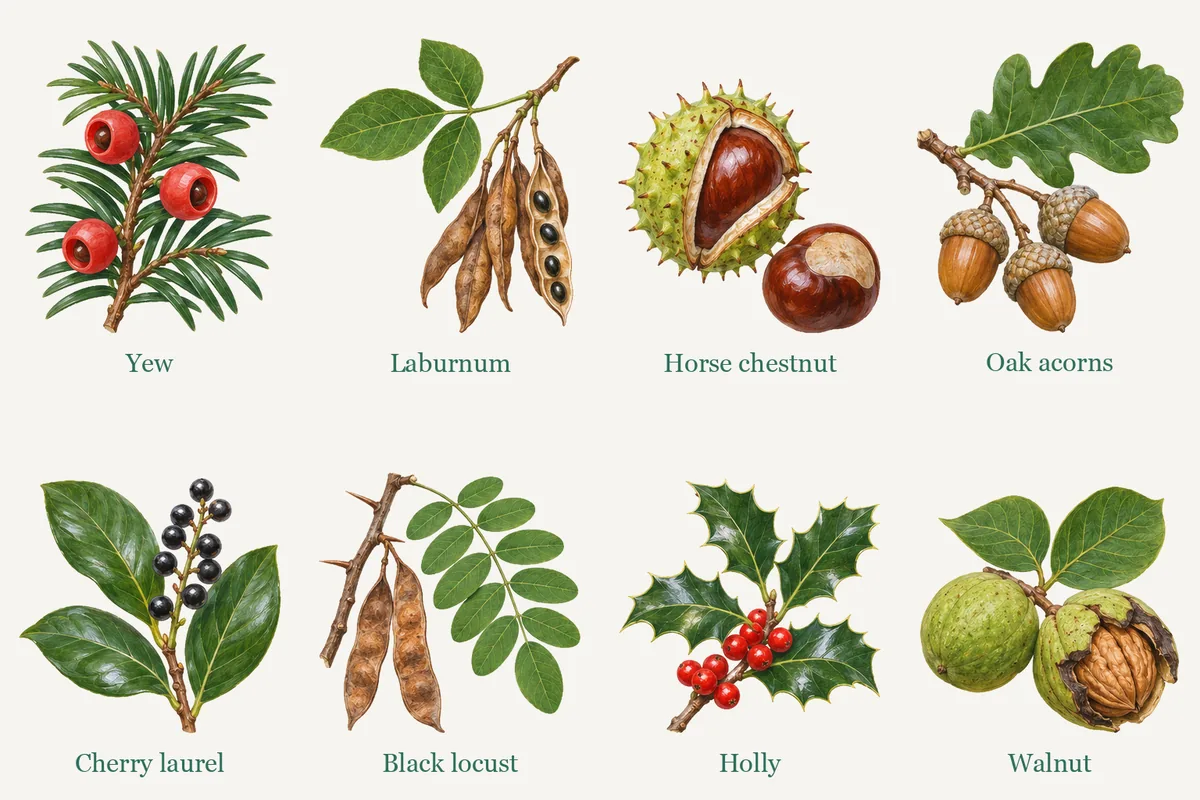
Yew: the hedge that can stop a heart
Yew is the tree on this list most likely to be growing right beside a house, as a clipped hedge, a foundation shrub or an old churchyard tree. The ASPCA lists every Taxus species as toxic to dogs, cats and horses through the alkaloid taxine, with sudden death from acute heart failure as the main danger, and tremors, breathing difficulty and seizures as early signs in dogs. Treat every part as dangerous, the red fruits included.
How to recognise it: flat, dark green needles, paler beneath, set in two rows along green twigs; no cones; red, cup-shaped berries with a dark seed visible in the open end, from late summer. Bark is reddish-brown and flaky. The yew page tells it from hemlock and fir, whose needles look similar but which carry cones.
Sago palm: small, common and the most severe
The sago palm is not a true palm but a cycad, grown outdoors in the southern US and as a pot plant everywhere. Pet Poison Helpline says any part of Cycas revoluta can poison a pet, especially the seed or nut, through cycasin: vomiting, diarrhoea and bloody vomit, unsteady walking and seizures, then liver or other organ failure and death. It names coontie and cardboard palm as related plants that cause the same poisoning.
How to recognise it: a short, shaggy brown trunk topped by a rosette of stiff, glossy, feather-like fronds with narrow, sharp-tipped leaflets that feel like plastic; female plants carry a felted, golden cone of orange-red seeds in the centre. The palm page explains how true palms differ.
Conkers, buckeyes and acorns: the autumn hazard
In UK parks the commonest tree risk to dogs falls on the ground every September. Dogs Trust says conkers (from horse chestnut) and acorns (from oak) are toxic for dogs and can in some cases be deadly, that they are a choking hazard and can block a dog's gut, and that a chewed or eaten one can make a dog unwell within hours: vomiting, diarrhoea, stomach pain, restlessness, a rash, swelling around the eyes and mouth, and collapse. It advises keeping dogs on a lead where they lie.
- Horse chestnut and buckeye (Aesculus): leaves of several leaflets spread like fingers from one stalk, opposite on the twig; shiny brown seeds in a husk, spiny on horse chestnut, smoother on most American buckeyes. The ASPCA lists aesculin and other saponins; Pet Poison Helpline names red buckeye as the most toxic species and puts toxins in the leaves, bark and seeds. A sweet chestnut's edible nut sits in a far spinier husk under a long, single toothed leaf: see horse chestnut vs sweet chestnut.
- Oak: acorns are smooth brown nuts with a scaly cap, under lobed or toothed leaves. The ASPCA lists oak as toxic to horses through gallotannin and warns that acorns can obstruct the digestive tract; the acorn identification guide names the oak from its acorn.
Black walnut: the danger is mould
The ASPCA lists black walnut as toxic to dogs and horses but not cats. In dogs it links tremors and seizures to moldy nuts and hulls, and incoordination to eating wood shavings; in horses, laminitis and colic. Fallen husks that blacken and rot on a lawn in autumn are the ones to keep a dog away from.
How to recognise it: long compound leaves of many paired leaflets; round green husks that stain hands brown; dark, deeply ridged bark. The walnut page separates it from butternut and English walnut.
Cherry, chokecherry and cherry laurel
The ASPCA lists Prunus as toxic to dogs, cats and horses: stems, leaves and seeds contain cyanogenic glycosides, particularly as they wilt, and signs include brick-red gums, dilated pupils, difficulty breathing, panting and shock. Pet Poison Helpline rates cherry as mild for dogs, says the ripe pulp around the seed is not considered toxic, and notes that a crushed pit releases cyanide while a whole one can block the gut. A storm-broken cherry branch with wilting leaves is the moment to keep a dog away.
How to recognise them: cherries have finely toothed, alternate leaves, often with two small glands on the leaf stalk, and bark with horizontal lines (lenticels). Chokecherry carries its fruit in long hanging clusters (chokecherry); cherry laurel is an evergreen hedge with large, glossy, leathery leaves (cherry laurel).
Black locust, laburnum, holly and chinaberry
- Black locust: Pet Poison Helpline says all parts contain toxalbumins that cause moderate to severe gut signs in companion animals. Look for compound leaves of small rounded leaflets, a pair of short thorns at each leaf base, hanging white flower clusters in late spring and flat brown pods; the locust page tells it from honey locust.
- Laburnum, the golden chain tree: Pet Poison Helpline says all parts, from leaves and bark to pods and seeds, contain alkaloids that cause gut and neurological signs. It has leaves in threes and long chains of yellow pea flowers in late spring, then pea-like pods; see the laburnum page.
- Holly: listed by the ASPCA and Pet Poison Helpline for saponins in the leaves and berries; spiny, glossy evergreen leaves and red berries on female trees (holly).
- Chinaberry: listed by the ASPCA, with the ripe yellow berries the most toxic part; the ASPCA adds that the bark, leaves and flowers are toxic too. Ask a local expert to confirm the tree before you clear it.
Using a photo when your dog has eaten something
If your dog has chewed a twig, a nut or a berry, call first and identify second. Then photograph the leaf and any fruit together, plus the bark if you can, so the vet knows which tree it was. Tree Identifier names a tree from one photo, and its Toxicology tool gives AI-written notes on toxic parts and symptoms for people, dogs and cats. Those notes are a starting point for the conversation with your vet, never a verdict that a plant is harmless. Tree Identifier needs an internet connection, so in a remote spot take the photos and look the tree up later.
What a photo can't settle
- A photo can name a tree, but it cannot tell you how much your dog ate, which part, or whether the nut was moldy; only a vet can judge the risk from that.
- Toxic lists cover the plants reported to poison centres. A tree that is missing from a list, or listed as non-toxic, can still upset a dog's stomach or block its gut.
- Common names overlap: horse chestnut and sweet chestnut, black locust and honey locust, cherry and cherry laurel are different trees with different listings, so check the scientific name.
Questions people ask
What is the most poisonous tree for dogs?
Of the trees on the ASPCA and Pet Poison Helpline lists, yew and sago palm carry the gravest warnings. The ASPCA names sudden death from heart failure as the main danger of yew; Pet Poison Helpline lists liver failure and death after a dog eats any part of a sago palm, especially the seed.
Are acorns and conkers poisonous to dogs?
Dogs Trust says both are toxic for dogs and can in some cases be deadly, and that they can cause choking and gut blockages. Signs it lists include vomiting, diarrhoea, stomach pain, restlessness, swelling around the eyes and mouth, and collapse, within hours of chewing.
Are cherry trees poisonous to dogs?
The ASPCA lists cherry and other Prunus trees as toxic to dogs: stems, leaves and seeds contain cyanogenic glycosides, worst when wilting. Pet Poison Helpline says the ripe pulp is not considered toxic, but crushed pits release cyanide and whole pits can block the gut.
Is a maple tree toxic to dogs?
The ASPCA lists red maple as toxic to horses, through wilted leaves, and as non-toxic to dogs and cats. That is a listing, not a guarantee: any leaves or seeds a dog swallows in quantity can upset its stomach, so call a vet if your dog is unwell.
What should I do if my dog ate part of a tree?
Take the dog away from the plant, keep a piece of it or a photo, and call your vet or an animal poison line at once: ASPCA Poison Control (888) 426-4435 or Pet Poison Helpline (855) 764-7661 in the US; both may charge a fee. Do not make the dog vomit unless a vet tells you to.
Sources
- Yew (Taxus spp.) — ASPCA Animal Poison Control
- Black Walnut (Juglans nigra) — ASPCA Animal Poison Control
- Cherry (Prunus spp.) — ASPCA Animal Poison Control
- Oak (Quercus species) — ASPCA Animal Poison Control
- Sago Palm — Pet Poison Helpline
- Black Locust — Pet Poison Helpline
- Golden Chain Tree — Pet Poison Helpline
- Conkers and acorns: why they're harmful to your dog — Dogs Trust